Atatürk Park (Mersin) — a green promenade along the reclaimed shoreline
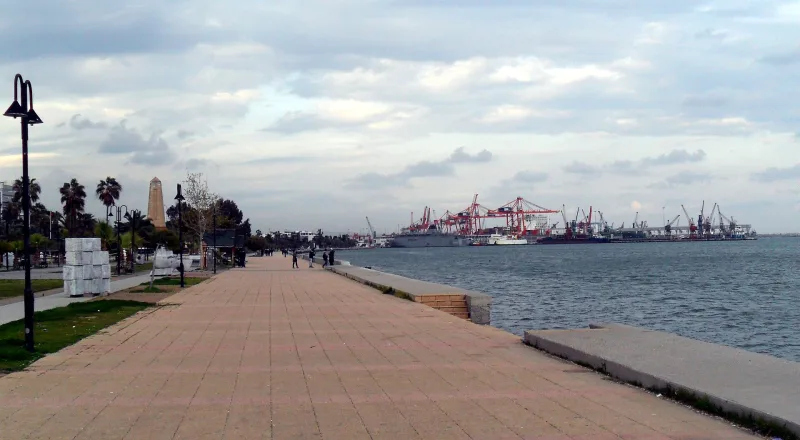
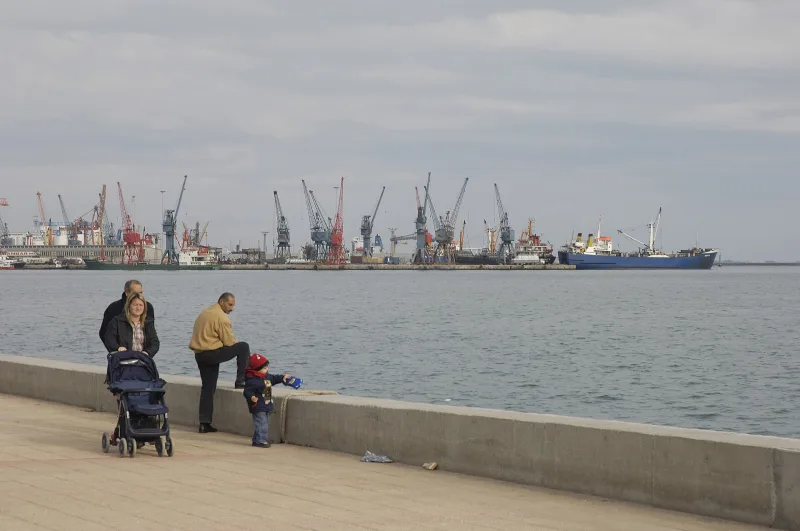
Stretching 1,200 meters along the Mediterranean coast of Mersin is an area that locals simply call “the park”—Atatürk Park (Mersin) (Atatürk Parkı). It covers an area of 184,772 square meters, or about 16 hectares. In the morning, joggers enjoy the trail with a view of the sea; during the day, fishermen cast their lines near the old marina; and at sunset, the flower beds are bathed in red light. Atatürk Park (Mersin) is the city’s main “lung,” a place where the noise of the port meets the sea breeze, and near the central monument stands a memorial to two tragic episodes in Turkish naval history. This is not a park-attraction in the usual sense, but a living urban space where history coexists with everyday life.
History and Origin of Atatürk Park (Mersin)
The park has an unusual origin: it was literally washed up from the sea. In the 1950s, large-scale dredging operations were carried out in the port of Mersin. The soil dredged from the seabed was not removed—it was deposited along the shore, gradually widening the strip of land between the water’s edge and the city’s buildings. This is how the reclaimed area came into being, which was eventually developed into a public space.
In the 1970s, the municipality officially designated the area as a park: coffee shops, recreational areas, and open-air theaters appeared. For decades, the park served as the main venue for city fairs, drawing residents from across the province of Mersin. Right up until the 2000s, people came here not only to stroll but also to shop, watch performances, and participate in city festivals.
Gradually, the center of attraction shifted. In 2011, Mersin Marina opened 5 kilometers to the west—a modern complex featuring a yacht harbor, a shopping center, and cultural venues. It was there that part of the crowd that had previously gathered in Atatürk Park moved. Nevertheless, the park has remained a favorite place for walks and is now undergoing a rebirth as part of an urban renewal program: the municipality is transforming it into a cultural park.
In 2008, the Mersin Congress and Exhibition Center (Kongre ve Sergi Merkezi), with an area of 3,160 m², was opened in the northeastern part of the park. The complex includes conference rooms, a performance hall, a swimming pool, and supporting infrastructure. Next to it is an open-air theater with 2,000 seats—the largest summer stage in Mersin Province.
Architecture and What to See
Atatürk Park (Mersin) is a linear park stretching along the coast. Its long axis (over 1,200 m) runs from northeast to southwest, parallel to the shoreline. To the east, the park is bordered by port facilities; to the west, by the old marina and the mouth of the Efrenk River; and to the north, by İsmet İnönü Boulevard. To the southwest, the coastal strip extends another 7 km—to the Müftü River—but only the central section is referred to as “Atatürk Park.”
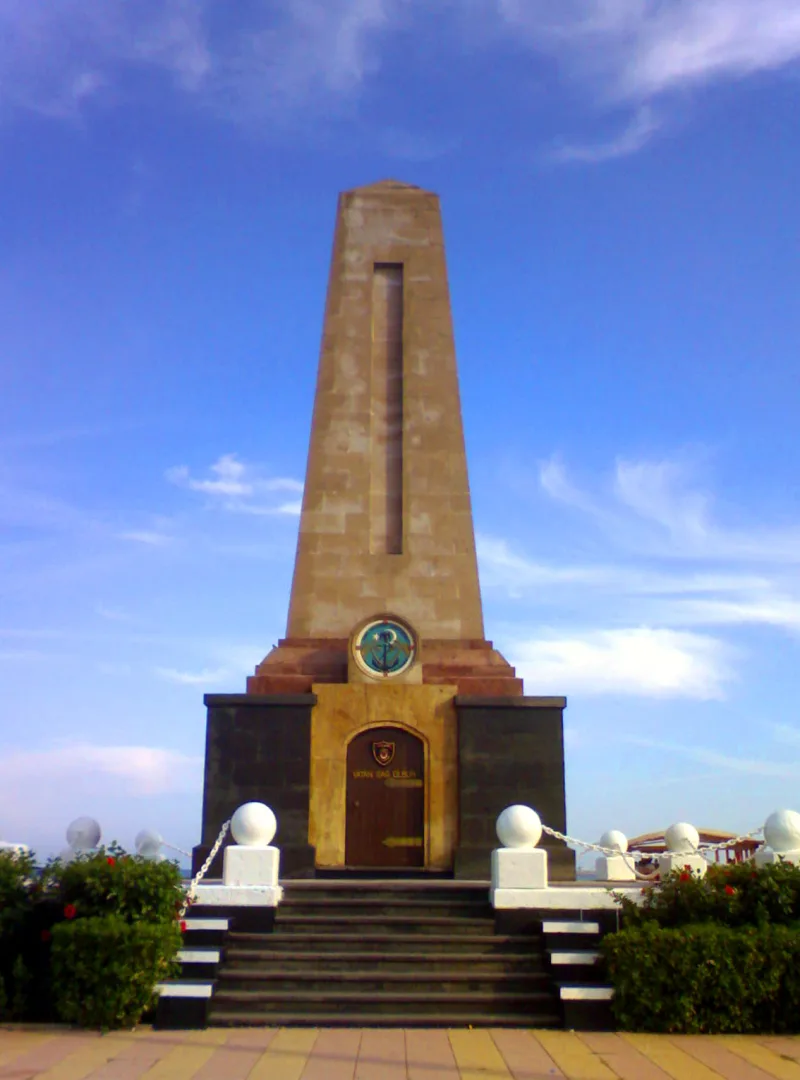
The "Refah Martyrs" Monument (Refah Şehitleri Anıtı)
In the central part of the park stands a monument dedicated to two tragedies of the Turkish Navy. One side of the monument commemorates the sinking of the steamship “Refah,” which was sunk on June 23, 1941, near the coast of Cyprus during World War II. Another side commemorates the victims of the frigate Ertuğrul—the flagship of the Ottoman Navy, which sank on September 18, 1890, off the coast of Japan during an official visit to that country. The third side bears a message from Chief of General Staff Fevzi Çakmak. The monument is the only one in Turkey where tragedies separated by half a century are commemorated side by side.
Fishing Club and Old Marina
In the western part of the park, near the fishing boats’ moorings, a fishing club has taken root. In the morning, you can watch fishermen preparing to head out to sea or sorting the night’s catch—a scene typical of Mediterranean port life. Nearby are the gangways of the old marina, offering a fine view of the horizon.
Flower beds and the promenade
Flower beds occupy most of the park’s area. The municipality regularly updates the seasonal plantings: petunias and pansies dominate in the spring, while marigolds and salvia take center stage in the summer. A walking path runs along the shore—long, flat, with a view of the sea, suitable for both leisurely strolls and jogging. A morning jog along the 1,200-meter-long path, with the scent of salt and the roar of the surf, is one of Mersin’s best free pleasures.
Congress Center and Open-Air Theater
The Congress and Exhibition Center (Kongre ve Sergi Merkezi) in the northeastern part of the park is a modern building from 2008 with an area of 3,160 m². It hosts international conferences, exhibitions, and concerts. The open-air theater, which seats 2,000 spectators, hosts festivals, theatrical performances, and open-air music evenings in the summer—with the sea serving as the backdrop to the stage.
Interesting Facts and Legends
- Atatürk Park was literally reclaimed from the sea: the entire site is reclaimed land created during dredging operations in the 1950s. Before that, the waters of the Mediterranean Sea lapped here.
- The frigate "Ertuğrul," mentioned on the monument, sank off the coast of Japan in 1890—one of the most tragic episodes in the history of the Ottoman fleet. Its sinking marked the beginning of a special relationship between Japan and Turkey: local Japanese fishermen rescued 69 survivors and tended to the graves of the deceased for many years. In 2015, a Japanese historical film was made about this story.
- The steamship "Refah" was sunk near Cyprus during World War II. The sinking of a civilian vessel in neutral waters was a painful event for Turkey, which had officially maintained neutrality.
- The 2008 Congress Center was built on land that, as recently as the 1970s, served as a site for city fairs. Over the course of 35 years, this same stretch of reclaimed land transformed from a marketplace into a cultural complex spanning several kilometers.
- Ismet Inönü Boulevard, which borders the park to the north, is named after Turkey’s second president—Atatürk’s closest associate. Both names—Atatürk and Inönü—coexist here in the place names, creating a small memorial to the era of republican nation-building.
How to get there
Atatürk Park is located in the center of Mersin, in the Akdeniz district, right on the Mediterranean coast. Center coordinates: 36°47′45″ N, 34°37′46″ E. The park is visible from the main promenade; use the port facilities to the east and İsmet İnönü Boulevard to the north as landmarks.
The nearest major airport is Adana Şakirpaşa (ADA), about 70 km to the east. From Adana to Mersin, take TCDD buses or trains; the journey takes about an hour. In Mersin itself, the city center and the waterfront are easily accessible by metro or city tram. The park is open 24 hours a day, and admission is free.
Tips for travelers
The best time for a walk is in the morning or at sunset. In the morning, the promenade is quiet, with a fresh sea breeze, and you can watch the fishermen preparing to head out to sea. At sunset, the sea glows golden, the flower beds burst with color, and the monument on the central avenue looks particularly majestic.
The park is suitable for any weather: on a hot day, it’s cooled by the sea breeze; on a cool day, it becomes a cozy spot for a long walk. Bring a change of shoes if you plan to go for a run: the path surface is uneven in places. Bicycles and scooters are also welcome here—the long, straight promenade seems made for them.
Combine your visit with other spots in central Mersin: the Atatürk Museum in Mersin is a few blocks to the north, and the Grand Bazaar is also within walking distance. Near the park, you can eat at the seafood restaurants along the waterfront: Mersin cuisine offers fresh Mediterranean fish and the famous local tantuni. And if you stand by the “Martyrs of Refah” monument long enough, listening to the waves, you begin to realize that Atatürk Park (Mersin) is not just urban greenery, but a place of remembrance, woven into the living shoreline.